
Article Details
ProductGuidesAI
Choosing Your First AI Workflow: A Scorecard
The first AI project sets the budget for the next three. Pick a workflow that works and the organisation gives you room; pick one that stalls and every future proposal gets a harder question. So the choice matters more than the implementation, and it can be made in an afternoon with a scorecard.
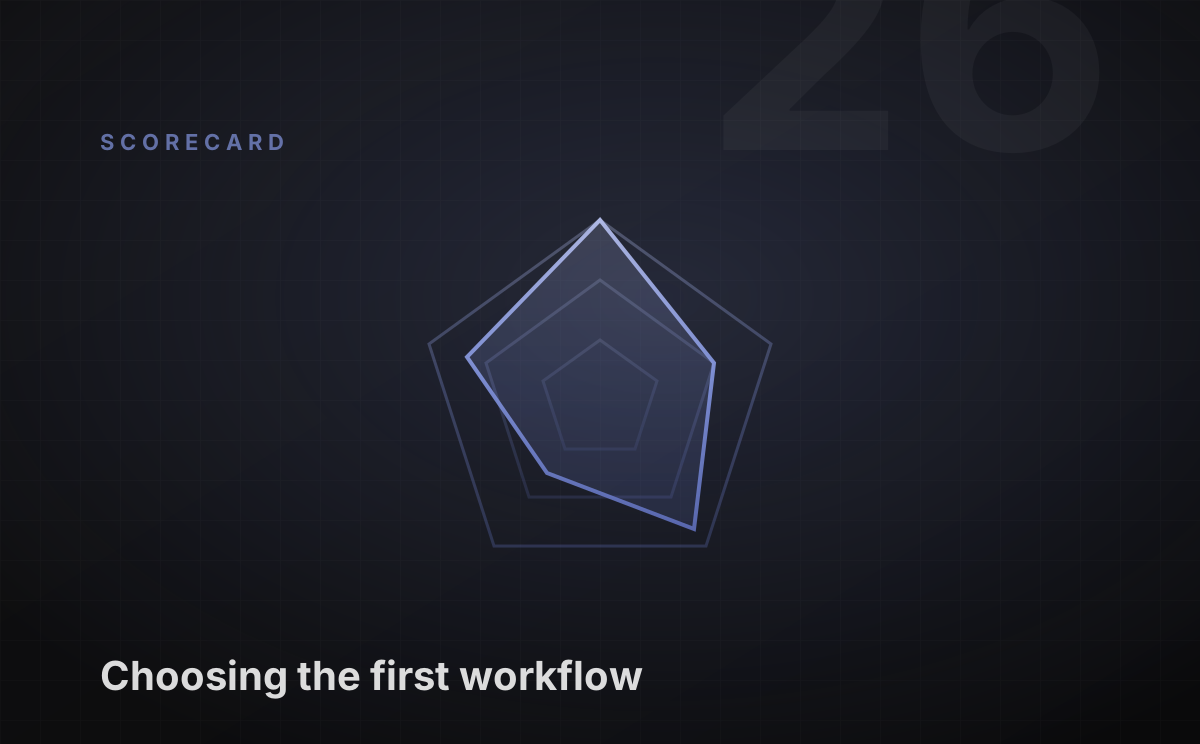
Score each candidate one to five
- Volume. Does this happen hundreds of times a month? Rare tasks never repay the engineering, however annoying they are.
- Tolerance for error. What happens when the output is wrong — a person catches it in review, or a customer gets an incorrect invoice?
- Data readiness. Does the information the model needs already exist in a system you control, in a form a machine can read?
- Measurability. Can you tell within a week whether it worked, using a number you already track?
- Ownership. Is there a named person who wants this and will use it daily? Tools nobody asked for do not survive their first bad week.
- Blast radius. If it fails badly on a Friday, is the consequence a slower queue or a regulatory incident?
Reading the score
- 24–30: build it. This is the project that earns you credibility.
- 18–23: build it with a human in the loop and a narrow scope.
- Below 18: it is a real problem, but not the one to start with.
The highest-scoring candidates are rarely glamorous. Internal document classification, first-draft responses reviewed by a human, structured extraction from PDFs that a person currently retypes — these score well because they are frequent, forgiving, measurable and owned.
The best first AI project is boring, internal and measurable. Save the customer-facing agent for after you have learned how your own data behaves.
Run the scorecard across five candidates before committing to one. The exercise takes an afternoon and routinely changes the answer people walked in with.
Our News
The Two-Week Paid Discovery That De-Risks a Six-Figure Build
Free proposals are priced to win work, not to be accurate. A paid discovery is the cheapest insurance a founder can buy.
Fixed Price, Time & Materials or Dedicated Team: Which Protects You
Every contract model moves risk somewhere. Here is where each one puts it, and the clauses that matter more than the model itself.
AI Features That Touch Customer Data: The Compliance Baseline
Before your agent reads a single customer record, seven controls need to exist. They take days to build and years to retrofit.
Red Flags in a Development Proposal: A Line-by-Line Teardown
Nine phrases that appear in ordinary-looking proposals, what each one is actually protecting, and the question that exposes it.